Insights ·
SEO didn’t die, it got stricter: search then and now, and the four gates to an AI citation
The short version
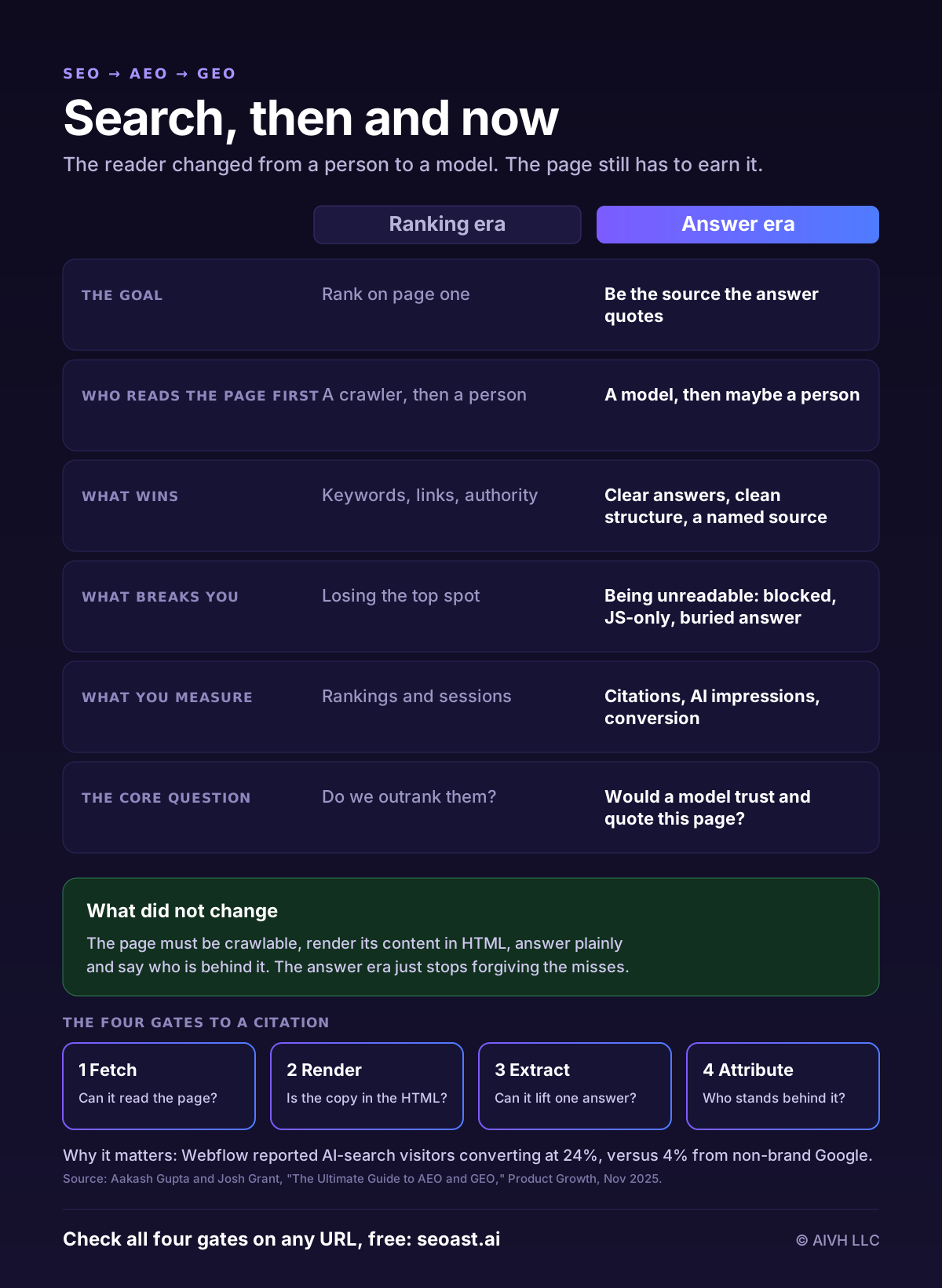
In the ranking era, the goal was a spot on page one and the first reader was a crawler feeding a list of links. In the answer era, the goal is to be the source an answer quotes, and the first reader is often a model. The foundations did not change: a page still has to be fetchable, carry its content in the HTML, answer plainly and say who is behind it. What changed is that answer engines stop forgiving pages that miss one of those. We call them the four gates: fetch, render, extract and attribute.
What changed
The reader changed. A growing share of questions is answered by a system that fetches pages, reads them and writes a reply, and sometimes names its sources. Being one of those sources is the new prize, and a ranked link is no longer the only way to be seen.
The measurement changed with it. Rankings and sessions still matter, but they miss the moments when an answer engine used your page without sending a click. Google’s Search Console now reports impressions in AI Overviews and AI Mode, but not clicks, so teams track citations by testing their target questions in each engine on a schedule.
The payoff can be large. Webflow reported that visitors arriving from AI search converted at 24%, against 4% for non-brand Google search, in a case study published by Aakash Gupta and Josh Grant.
What did not change
None of the new work replaces the old foundations. A page that cannot be crawled, that only shows its copy after JavaScript runs, or that hides its answer is invisible to answer engines for the same reasons it struggled in classic search. The difference is tolerance: a search engine will often still rank a flawed page, while an answer engine simply quotes someone else.
The four gates, in order
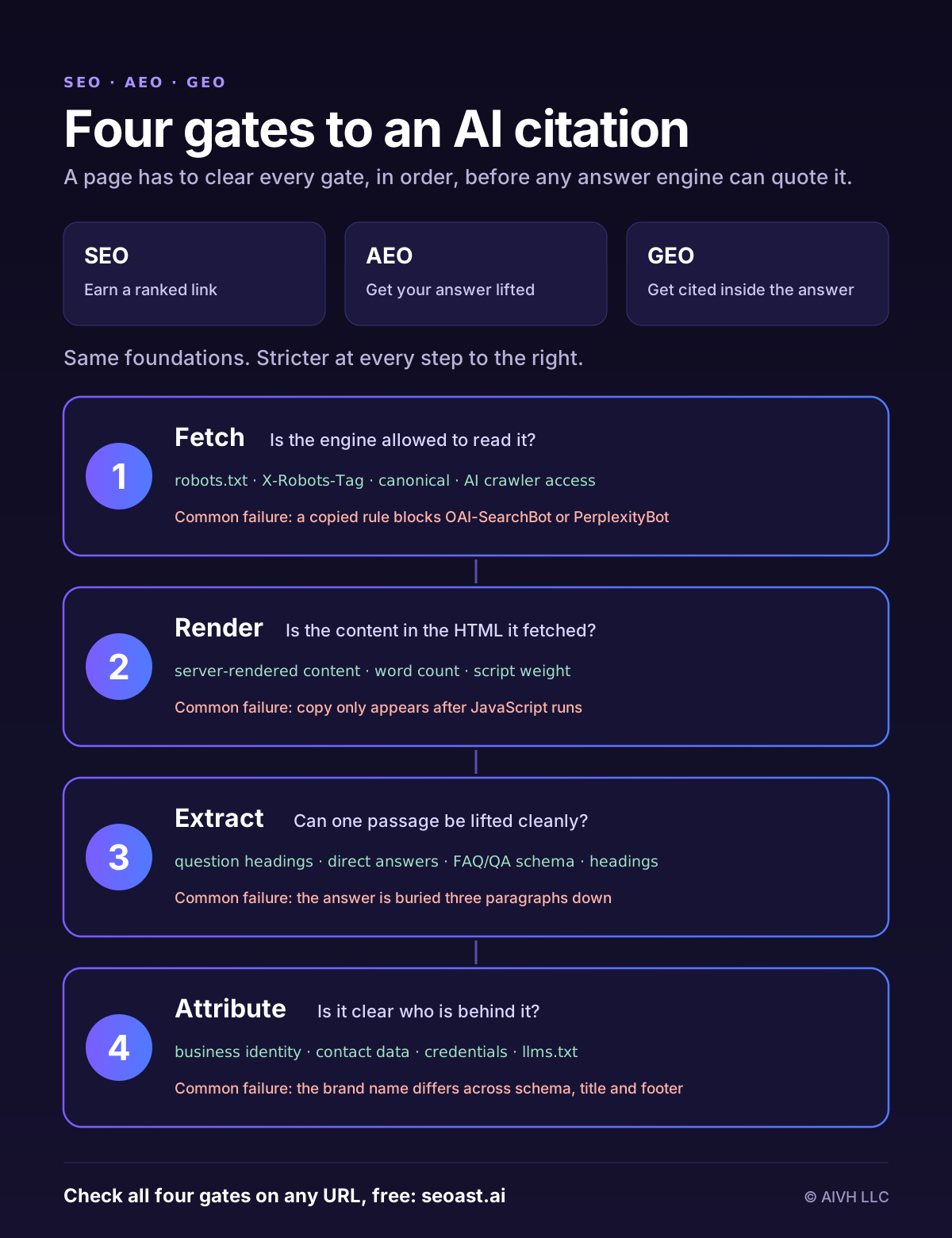
We use four gates because each one blocks everything after it. Fixing structured data does not help a page an answer engine is not allowed to fetch.
- Fetch: robots.txt, X-Robots-Tag and canonical rules must let the page be read, including by the crawlers answer engines use.
- Render: the copy has to be in the HTML the server returns, because many AI fetchers do not run JavaScript.
- Extract: a question as a heading and a direct answer under it, with FAQ or QA markup that matches the visible text, lets one passage be lifted cleanly.
- Attribute: a consistent business name across structured data, title and footer, published contact details, stated credentials for regulated work, and an llms.txt file make the source clear.
What to measure now
Keep the old metrics, and add three.
- AI impressions: the generative AI report in Search Console, for AI Overviews and AI Mode.
- Citations: a fixed list of target questions, tested monthly in each answer engine, logging which sources appear.
- Conversion by source: tag AI-referred visits separately so you can see whether they buy.
Where SEOAST fits
SEOAST checks all four gates on any URL, from the HTML your server returns, and ranks the fixes. It does not query ChatGPT, Perplexity, Gemini or Google AI Overviews, and it does not count citations. It tells you whether each page is ready to be cited, which is the part you control.
Questions
Is SEO dead?
No. The same foundations carry into answer engines. What changed is the reader and the goal: being quoted inside an answer, not only ranking in a list of links.
What is the difference between SEO, AEO and GEO?
SEO earns a ranked link. AEO shapes a page so its answer can be lifted into snippets and answer boxes. GEO aims for a citation inside AI-generated answers. All three rest on the same four gates.
Can I use these graphics?
Yes. Share them freely with credit to SEOAST and a link to this page.
Sources
- The Ultimate Guide to AEO and GEO: How to Get Traffic from AI — Product Growth (Aakash Gupta and Josh Grant)
- Google Search Console AI performance reports and Search generative AI control rolling out globally — Search Engine Land